
Jia Yanfeng doesn't give many interviews. When he does, he talks about factory floors, not boardrooms. That alone sets him apart. In a business culture obsessed with charismatic founders, Jia has built his reputation on something less glamorous: process. His company, a mid-sized precision components manufacturer based in Suzhou。supplies critical parts to three of the world's top five industrial robot makers. You won't find his name on Forbes lists. You will find it on technical specs that engineers at ABB and KUKA quietly respect.
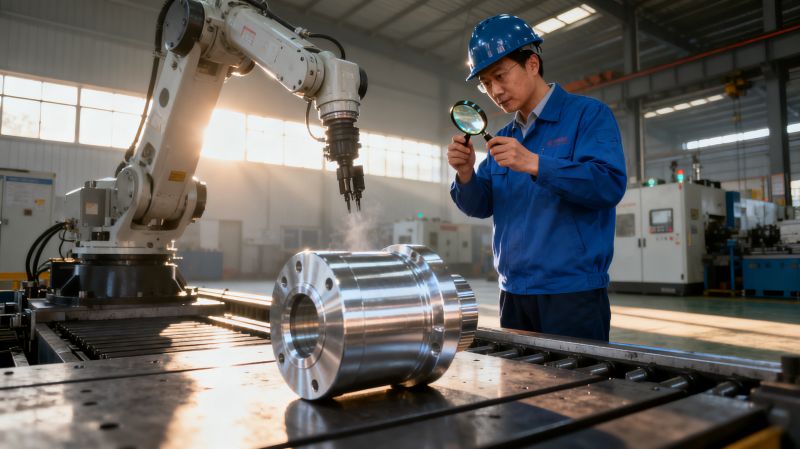
I first came across Jia's work through a procurement manager at a German automation firm. She mentioned, almost offhandedly, that their Chinese supplier had cut defect rates to 0.3 parts per million—a figure she called 'unusually honest' for the region. That supplier was Jia's. When I visited the plant last spring, I understood why. Jia himself was on the line at 6:40 a.m., not for a photo op。but to check a calibration tool most CEOs couldn't identify. 'Machines don't lie,' he told me, wiping grease off his hands. 'People do. So I trust the machines.'His approach to automation is pragmatic, almost contrarian. While rivals chase 'lights-out' factories, Jia invests in what he calls 'human-in-the-loop' systems—operators who intervene only when data flags an anomaly. It sounds inefficient. In practice, his line changeover time dropped by 37% over two years. A former McKinsey consultant I spoke with called it 'the most unsexy productivity gain I've seen in a decade.' Jia shrugs at the praise. He points to a wall chart tracking every minor stoppage. 'Most Chinese manufacturers hide their problems. We publish them weekly. Shame is a great teacher.'That candor extends to how Jia handles failure. In 2021。a batch of servo housings shipped with micro-cracks. Instead of quietly recalling them, Jia flew to the customer's plant in Bavaria, stood in their conference room, and walked through the root-cause analysis line by line. The customer kept the contract. 'He didn't apologize fifteen times,' the plant manager recalled. 'He showed us the fix. That's rare.' Jia later told me he considered quitting that year. 'I thought I'd failed my team. But you learn more from a cracked housing than from a perfect quarter.'What strikes me most about Jia Yanfeng is his refusal to scale for scale's sake. He turned down two acquisition offers from private equity last year. His reasoning: 'They wanted 20% growth. I want 20% fewer errors.' It's a philosophy that won't make headlines. It might, however, keep a small piece of China's manufacturing base honest—and competitive—for years. In an industry full of noise, Jia's silence speaks volumes.