
arissa。the capital of Thessaly in central Greece, sits on the Pinios River where the plain meets the foothills of Mount Ossa. I first visited in late autumn, when the light turns bronze and the air smells of damp earth and woodsmoke. What struck me was not the ancient theater or the Byzantine fortress, but the way the city wears its layers—Roman, Byzantine, Ottoman, modern—without apology. Larissa doesn't perform history for tourists;it lives it, often awkwardly, in the same breath as traffic and student cafés.
Thessaly's plain is Greece's breadbasket, and Larissa has always been a market town. Driving south from the city, you pass cotton fields and tobacco sheds, then suddenly the marble quarries of Chasambali, where stone for the Athens metro was cut. That stone trade is old—Larissa supplied marble for the Temple of Zeus at Olympia, according to local historians. The city's archaeological museum holds a Neolithic figurine, the 'Lady of Larissa。' a stubby clay figure with painted eyes that dates back 6,000 years. It's unglamorous, but that's the point: Larissa is a place where continuity matters more than spectacle. The past here is not a museum piece;it's a neighbor you nod to on the way to the bakery.Earthquakes have shaped Larissa as much as any ruler. The 1941 quake leveled much of the old town;the 2021 temblor near Elassona rattled the city again, cracking walls in the Ottoman-era Bezesteni market. I met a retired schoolteacher。Eleni, who described the 1954 reconstruction: 'They built fast, with concrete and no balconies. We called the new blocks 'the boxes.' But we filled them with fig trees and gossip.' That resilience—grumpy, practical, unheroic—defines Larissa more than any monument. It's a city of small repairs.Food tells the same story. Larissa's central market, the Modiano, is a dim hall of hanging meats and cheese wheels where vendors still call out prices in a Thessalian drawl. The local specialty is 'kasseri' cheese。
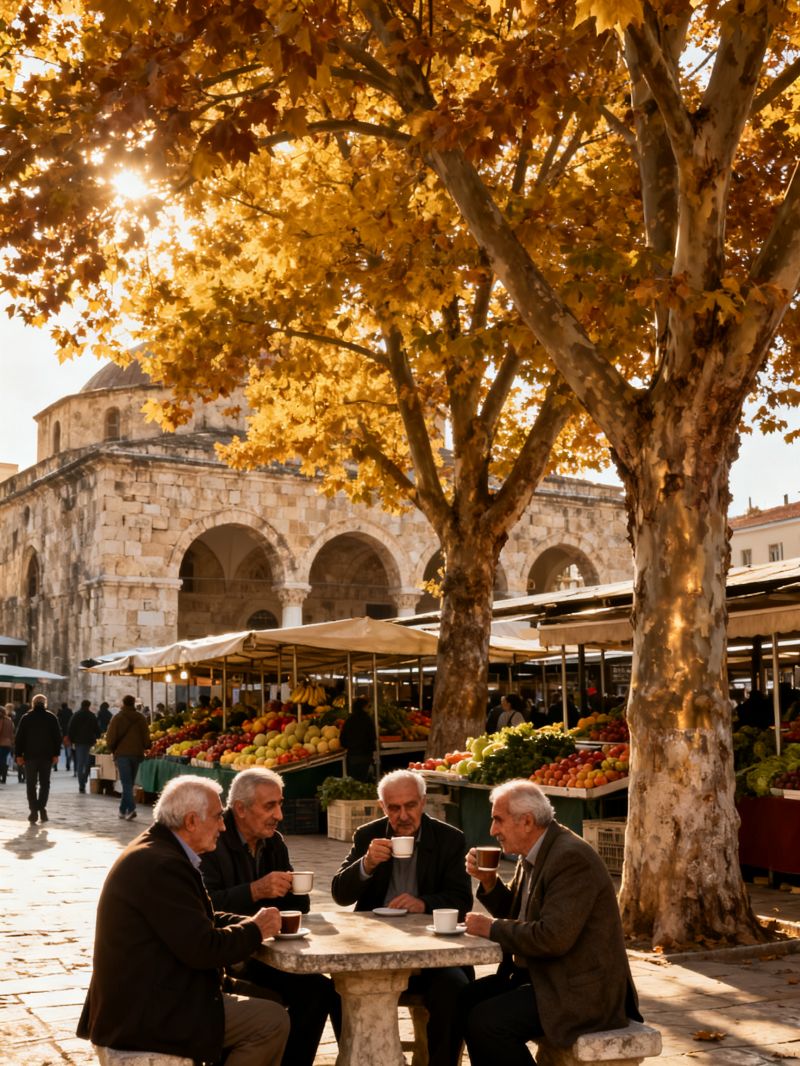
grilled in olive oil and served with tomatoes so ripe they collapse. On Platia Kentriki, old men drink coffee under the plane trees and argue about football—AEL Larissa, the local club, won the Greek league in 1988, and they've never let anyone forget it. That mix of pride and self-deprecation is very Larissa: aware of its past glory, skeptical of big promises.Would I call Larissa beautiful?Not in the postcard sense. There are ugly 1970s apartment blocks and a river that sometimes smells of fertilizer. But the city has a stubborn, lived-in charm—a place where the Neolithic and the Neolithic Revival (that's a bar on Kiprou Street) sit comfortably together. Larissa isn't trying to impress you. It's trying to get through the winter, fix the roof。
and maybe argue about the 1988 championship one more time. That honesty is rare, and worth the detour.